Mein Rostock, unser Hansa

Hansa Rostock graffiti

You’ve not made it as a city until a pop song has been written for you. New York. Paris. Amsterdam. Bangkok. Erm, Amarillo. This tradition exists among songwriters in other languages also. In German, the ballads are usually dedicated to the romance, excitement and hedonism of Berlin. It lends itself far better to poetry than, for example, Bremerhaven. But one unlikely German city has found itself subject of a modern smash-hit.

Rostock. The song Continue reading

Angry Cops And Belgians

Lokeren train station

A wall of aggression. A barrier of taxpayers’ money. One single channel holding 2,000 fans in complete anarchy. Glassware continued to rain down indiscriminately. A middle-aged woman behind me shook with fear. Two men burst through the crowd, one supporting the other, blood rolling down his face. It wasn’t a fight because it wasn’t fair. Our travelling support suffered greatly; it was more than humiliation Continue reading

5 Unique German Clubs

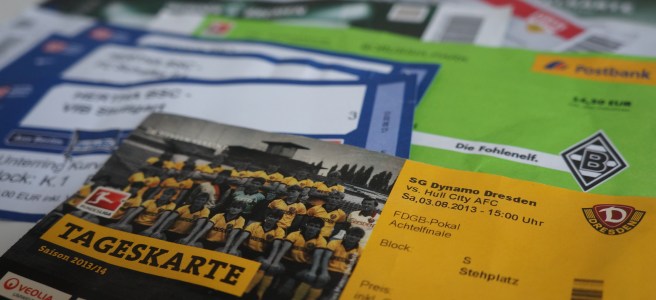
Bundesliga Football tickets

This post is a part 2 to Club Comparison, England and Germany; an entry that was very popular. In that post, we tried to match DFB and FA clubs based loosely on their characters and identities. In this post, we take a look at some of the German clubs that simply stand out too much to be coupled with an English equivalent. Enjoy.

Bayer Leverkusen

In 1904, a group of employees Continue reading

War Games: the Caveman Within

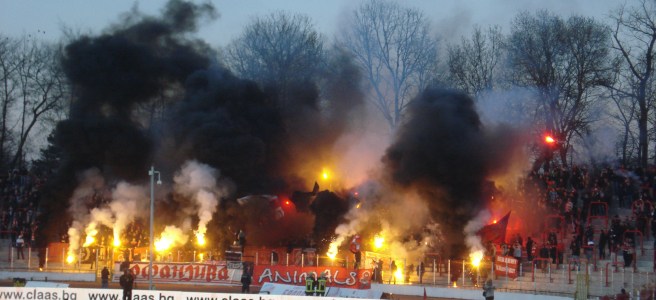
Ultras

In his essay ‘The Sporting Spirit’ George Orwell famously wrote,

“[Sport] is war minus the shooting”

He was writing in the mid 20th century. Orwell claimed that ‘serious’ sport as he put it was always competitive, ruthless and extremely aggressive thanks to spectators venting their frustration and energy in attempts to help defeat opponents by means of intimidation and foul play. His observation was that the manner of victory was obsolete; maintaining prestige was the only imperative. Fans felt compelled to fight alongside the sportsman to improve chances of victory. An aggressive atmosphere was therefore a natural bi-product of competitive sport.

Orwell’s comparison of Sport to War is appropriate, but not complete in explanation. The simple Continue reading